

How to Get an Engineering Job in 2026
Short answer: how to get an engineering job in 2026 comes down to four things — the right degree for the branch you want, proof you can do real engineering work, a CV that shows what you built or improved, and interview answers backed by specific examples. Employers hire engineers they trust with real projects, real budgets, and real safety, so every part of your application should answer one question: can this person do the work, on a real site or in a real team, without constant supervision?
Engineering is one of the broadest careers there is. A civil engineer, a mechanical engineer, an electrical engineer, and a software engineer all carry the same job title — engineer — but they do very different work, use different tools, and get hired through different routes. That is why generic job-search advice often fails engineers: the steps are the same in outline, but the details depend on your branch. This guide walks through the whole process in order: choosing your branch, getting the degree and credentials employers actually ask for, building proof through projects and internships, writing an engineering CV, finding the jobs, handling the interview, and the mistakes that quietly cost engineering candidates the job. It also covers a local angle for readers applying in Pakistan.
How to Get an Engineering Job in 2026: What Employers Actually Look For
Before you apply anywhere, it helps to know what a hiring manager is actually screening for. It is not only technical knowledge. An engineering employer is asking whether you can be trusted with work where mistakes cost money, time, and sometimes safety. That judgement comes down to five things:
Technical fundamentals in your branch. An employer expects you to know the core subjects of your field — a civil engineer who understands structures and materials, a mechanical engineer who understands thermodynamics and mechanics, an electrical engineer who understands circuits and power systems. You do not need to know everything, but you need a solid base in the subjects your branch runs on.
Practical ability, not only theory. Engineering is applied work. Employers look for evidence that you have built, tested, measured, or fixed something real — a final-year project, an internship, a site placement, a workshop build. A candidate who can describe a real project in detail usually beats a candidate with better grades and no practical evidence.
Problem-solving you can explain. At interview, engineers are often asked to walk through how they solved a problem. The employer is listening for a clear method: how you defined the problem, what you checked, what you tried, and what the result was. Vague answers — “I worked hard on it” — tell them nothing.
Communication and teamwork. Engineers rarely work alone. You will write reports, explain a design to a non-engineer, work with technicians and contractors, and present your work to a client or a manager. Employers notice candidates who can explain technical work in plain language.
Reliability and attention to detail. Engineering drawings, calculations, and site work all punish carelessness. A CV with errors, a design with a missed detail, or a candidate who cannot describe their own project precisely will raise doubts — because the same carelessness on a live project costs far more.
If you are a fresh graduate, notice that employers are not expecting years of experience. They are expecting a degree, some practical proof, and the ability to explain both clearly. Your application should make that proof visible instead of hiding it behind a list of courses.
Step 1 — Pick Your Branch Before You Apply
The first practical step in learning how to get an engineering job in 2026 is to decide which branch you are applying in — and to apply as that branch, not as a generic engineer. The main branches most employers hire in are civil, mechanical, electrical and electronics, chemical, software and computer, and industrial engineering, with many smaller fields inside each one. Each branch has its own employers, its own tools, and its own language, and a CV that tries to cover all of them usually convinces none of them.
If you already hold an engineering degree, your branch is largely set — apply in the field your degree trained you for, and make that obvious in the first lines of your CV. If you are still choosing, think about the work itself rather than only the job title: civil engineers spend time on sites and drawings for buildings and infrastructure; mechanical engineers work with machines, engines, and manufacturing; electrical engineers work with power, control systems, and electronics; software engineers build and maintain software systems. The U.S. Bureau of Labor Statistics architecture and engineering occupations pages describe what each type of engineer actually does day to day, and they are a useful cross-check before you commit to a branch.
Two practical notes. First, some branches cross over: a mechatronics engineer works across mechanical and electrical, and a software engineer with an engineering degree can apply for software roles too. If your degree sits between two branches, pick the one where your projects and internships sit, and say so plainly. Second, do not apply for every branch at once. A focused application to ten employers in your branch beats a scattered application to fifty employers in five branches — because the focused one reads like it was written by someone who knows the field.
Step 2 — Get the Degree and the Credentials Employers Ask For
For almost every engineering job, the degree is the entry ticket. Most engineering employers expect a bachelor’s degree in the relevant engineering field, and many prefer a degree from an accredited programme — in the United States, that usually means a programme accredited by ABET, the organisation that accredits engineering degrees there. Check whether your degree and university are recognised by the employers and the professional body in the country where you want to work, before you spend months applying — a degree that is not recognised locally will not get you past the first screen, however good the course was.
Beyond the degree, two credentials matter in many systems. In the United States, engineering graduates can take the Fundamentals of Engineering (FE) exam to become an engineer-in-training, and after several years of experience, the Professional Engineer (PE) exam for full licensure. Indeed’s guide on how to become an engineer walks through the same degree, FE exam, experience, and PE exam route step by step, and it is a useful cross-check alongside this guide. In Pakistan, the equivalent step is registration with the Pakistan Engineering Council (PEC) — many employers, especially in the public sector and on government-funded projects, ask for it, so registered engineers should state their PEC number on the CV.
A few credentials are branch-specific and worth having where they apply: design and drafting software for civil and mechanical engineers, programming languages and version control for software engineers, and safety training for anyone who will work on site. Only list tools and certificates you genuinely hold and can use — an interviewer will test them, and a claimed skill you cannot demonstrate is worse than a missing one.
If you are still studying, the cleanest route is to finish the accredited degree, take any graduate or entry-level licensing exam your country offers, and use your final year to build the practical proof the next step covers. If you already hold a degree in another field, look for a conversion route or a master’s in the engineering branch you want, rather than starting a second undergraduate degree — most systems have one, and it is usually shorter.
Step 3 — Build Proof: Projects, Internships, and Site Experience
The hardest part of getting a first engineering job is the loop every new engineer faces: employers want experience, and you cannot get experience without an employer giving you a chance. The way through it is to build proof in smaller settings first, so that by the time you apply, your CV shows real engineering work rather than only a degree.
Treat your final-year project as your first job application. A final-year project is the closest thing most fresh graduates have to real engineering work — and it is the first thing many interviewers ask about. Choose a project with a real problem, real measurements, and a real result, and be able to explain it in detail: what the problem was, what you designed or built, what went wrong, what you changed, and what the result was. A project you can explain well is worth more than a project with an impressive title and no story behind it.
Take an internship, even a short one. An internship in an engineering firm, a factory, a construction company, or a utility gives you three things a degree cannot: real work on a real project, a reference from a working engineer, and the language of the industry. Apply early — internship places are often filled months ahead — and if a paid internship is not available, a short unpaid placement with a real engineering team still counts, because what matters is the work and the reference, not the pay.
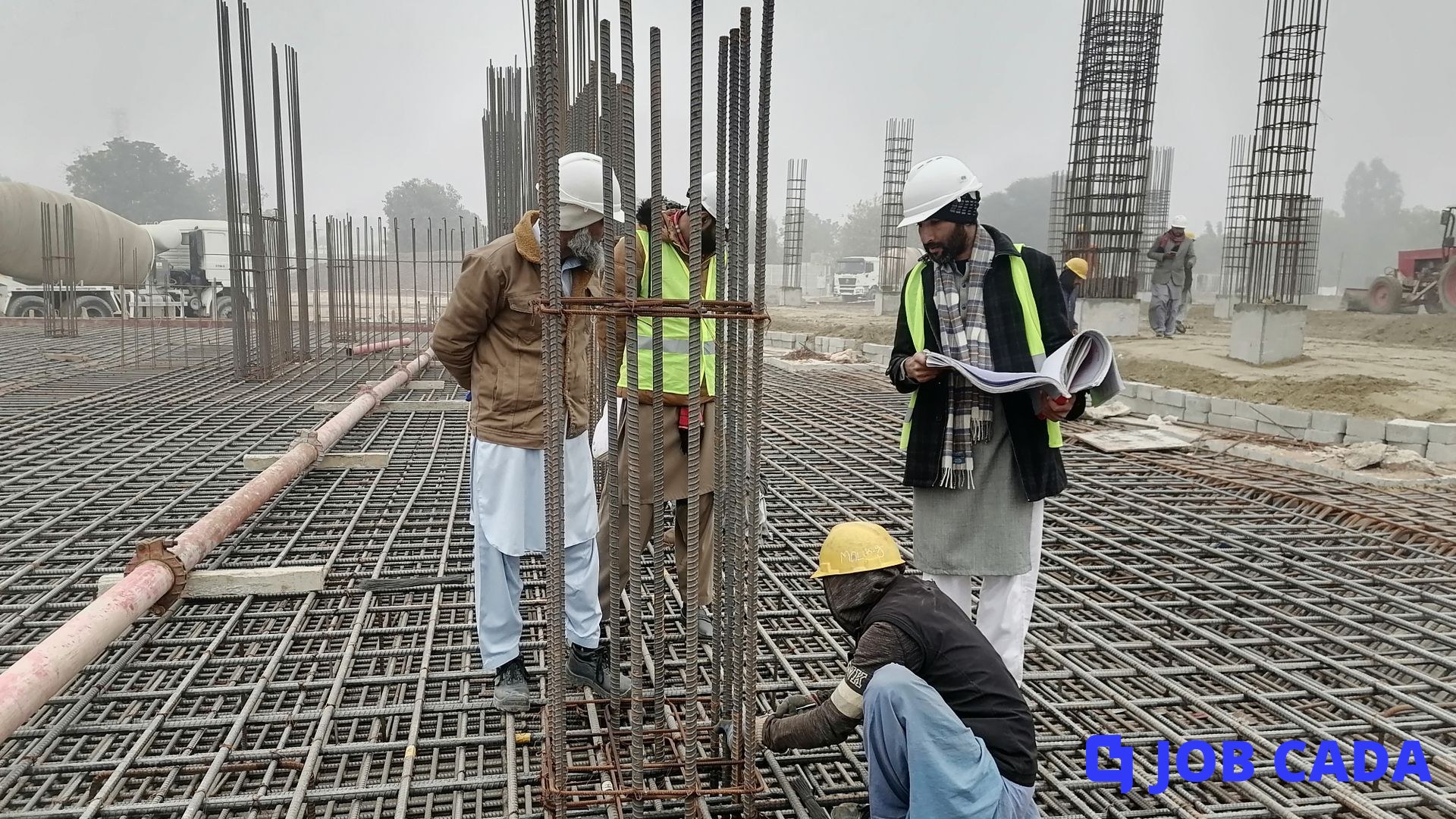
Get site or workshop time. If your branch involves sites or plants, any time spent on a real site matters: a summer placement with a contractor, a week shadowing a site engineer, a workshop build. It teaches you how drawings become structures, how schedules slip, and how teams actually work — and interviewers notice when a candidate can talk about real sites rather than only textbooks.
Build something on your own. A small personal project — a working prototype, a piece of software, a design you modelled and tested — is genuine engineering evidence. Document it: what you built, how you built it, what it does, and what you learned. Our guide on how to build a portfolio that gets you hired covers the same approach for other careers — gather proof first, then use that proof to get the first proper role.
None of this needs to be a famous project to count. What matters is that you can describe, with specifics, what you did, how you did it, and what happened. Our guide on how to get a job with no experience in 2026 covers the same approach for other careers — start small, gather proof, then use that proof to get the first proper role.

Step 4 — Write an Engineering CV That Shows What You Built
An engineering CV is not a list of courses you completed. Employers read it looking for evidence that you can do engineering work. The strongest engineering CVs lead with projects and results, and they read very differently from a generic CV.
Start with a short profile at the top — two or three lines naming your branch, your degree, and the kind of work you want. Then a section on projects and experience, with each entry written as an achievement, not a duty. Compare these two bullets for the same final-year project:
- Weak: “Completed a final-year project on bridge design.”
- Strong: “Designed a pedestrian bridge model for a final-year project: calculated loads for a 12-metre span, built a scaled model, load-tested it to failure, and revised the deck design after the first test showed a weak joint.”
The strong version works because it names the task, the method, the test, and the result — and it shows the employer how you think. If you are new to engineering, use your internship, placement, or personal project the same way — describe what you designed or built, how you did it, and what changed. Our guide on how to write a CV that gets shortlisted in 2026 uses the same achievement-first formula, and the same bullets work for an engineering application.
A few engineering-CV specifics:
- Put your branch and your tools where they can be seen in seconds. An employer hiring a mechanical engineer and an employer hiring a software engineer are looking for different things. Make it obvious which one you are, and list the tools you actually use — design software, programming languages, testing equipment — in a short skills line.
- List your degree, university, and year clearly, with any registration or licensing exam passed, such as FE or PEC registration. If you are still completing a degree, say so and give the expected completion date — do not leave the employer guessing.
- Keep it to two pages. An employer may read dozens of applications for one post. A long CV does not get read more carefully; it gets skimmed. Two pages, clear headings, and no unexplained gaps.
- Check every number and spelling twice. An engineering CV with a wrong figure or a careless error tells the employer exactly what they do not want to hear — that you are careless with detail. Read it once for content and once for errors before you send it.
Step 5 — Where to Find Engineering Jobs
Engineering vacancies appear in more places than most job seekers check, and knowing how to get an engineering job in 2026 means knowing where the vacancies actually appear — and checking more than one place. General job portals list many engineering roles — the JobCada jobs board lists engineering openings alongside other roles, and it is worth checking regularly because good vacancies often close within a couple of weeks of being posted.
Do not rely on portals alone. Many engineering employers advertise on their own careers pages first, especially large construction firms, manufacturers, utilities, and consultancies, and some fill graduate roles through campus recruitment before a vacancy is ever advertised widely. Make a shortlist of the employers you would actually like to work for and check their careers page every week. Professional bodies and engineering associations also run job boards and graduate schemes, and they are worth checking alongside the general portals.
Timing matters. Many large employers run graduate and trainee intakes once a year, with applications opening months before the start date — so a graduate who starts looking in the final semester has a better chance than one who starts after graduation. Smaller employers hire all year as projects start, so apply as soon as you see a post that fits; they often interview on a rolling basis and close a vacancy once they find the right person, rather than waiting for a deadline.
When you apply, tailor the covering letter to that employer. Mention the employer by name, say why you want to work there specifically — its projects, its field, something you noticed about it — and connect your projects to the work in the advert. A generic letter sent to twenty employers reads like a generic letter. One short, specific paragraph about the employer itself is often the difference between an application that gets read and one that gets filed away.
Step 6 — Prepare for the Engineering Interview
The engineering interview has two parts, and both matter: the technical questions, and the behavioural questions about how you work. Most employers will test both, because an engineer needs both. Prepare for both, but put most of your preparation into being able to explain your own projects clearly — that is where most interviews are won or lost.
For the technical questions, expect questions about the fundamentals of your branch — a civil engineer may be asked about loads and materials, a mechanical engineer about mechanics and thermodynamics, an electrical engineer about circuits and power. Answer by thinking aloud: state what you know, show your working, and say what you would check next. Interviewers are often less interested in a perfect final answer than in seeing how you approach a problem you have not seen before. If you do not know something, say so plainly and explain how you would find out — guessing and bluffing is noticed quickly.
For the behavioural questions, expect questions about teamwork, a problem you solved, a mistake you made, and how you handle pressure or a deadline. Answer with specific examples, not general statements. For “Tell me about a time you solved a difficult problem”, a weak answer talks only about effort. A strong answer walks through the problem, the method, and the result:
“In my final-year project, the first version of my design failed its load test — a joint cracked well below the expected load. I checked the calculations, found I had used the wrong support condition, rebuilt the joint with a different connection, and re-tested it. The revised design held the full test load, and I documented the failure and the fix in the project report so the next team would not repeat the mistake.”
That answer works because it is specific, it shows a method, it admits a mistake, and it ends with a result and a lesson. Prepare two or three stories like this before the interview — a problem you solved, a project that went wrong and what you changed, a team situation you handled well — and use them to answer whatever you are asked. Our job interview preparation guide for 2026 covers the same example-first approach, and it applies directly to engineering interviews too.
The Pakistan Angle: Engineering Jobs at Home
For readers asking how to get an engineering job in 2026 from Pakistan, the routes in are different for the public sector, private firms, and work abroad — so it helps to know which one you are aiming at. Public-sector engineering posts are usually advertised by the relevant department or public service commission and filled through a written test and interview, with PEC registration commonly expected. Competition for these posts can be strong, so preparation matters: revise your branch fundamentals, practise the kind of written test the commission uses, and keep your documents — degree, PEC registration, and identity documents — ready in advance, because shortlists often move quickly.
Private firms hire directly and all year round. Construction companies, manufacturers, telecom operators, and energy firms in Lahore, Karachi, Islamabad, and other cities regularly advertise for engineers, and many also accept walk-in applications with a CV. For a first engineering job, a private firm can be a good starting point: the hiring process is usually faster, you get site or plant experience quickly, and a year or two of solid work — with a reference from your manager — strengthens a later application to the public sector or to a better-paid firm.
Many Pakistani engineers also look to the Gulf for their first or second job, where large infrastructure and energy projects hire engineers from Pakistan regularly. If that is your route, check the employer’s requirements carefully, confirm the role and the terms directly with the employer or a licensed recruiter before paying any fee, and never pay a fee to an agent for a job that has not been confirmed in writing. Our guide on free jobs in Pakistan and how to avoid job scams covers the same warning in detail — a genuine employer does not charge you for the job.
Wherever you apply, a few local details help. Engineering vacancies are widely listed on portals such as Rozee.pk as well as on company careers pages and in newspaper classifieds, so check all three rather than only one. English is the working language of most engineering employers in Pakistan, so make sure your CV and covering letter are free of errors — an employer will judge your English from your application before it ever meets you. And if you are a fresh graduate, read our guide on how to get a job in Pakistan as a fresh graduate alongside this one: it covers the same first-job tactics — applications, interviews, and avoiding fee-charging scams — that apply to engineering posts too.
Mistakes That Cost Engineering Candidates the Job
Applying as a generic engineer. A CV that does not name a branch tells the employer nothing about what you can actually do. Tailor it: branch, tools, projects.
No evidence of practical work. A degree alone rarely wins a post. If you have no internship or site experience yet, a final-year project or a personal build must appear on the CV — otherwise the employer has no reason to believe you can do the work.
A CV with errors in it. For an engineer, a CV with wrong figures or careless spelling is not a small thing. It signals the exact carelessness an employer is screening against. Check it twice.
Claiming tools you cannot use. Interviewers test the tools you list. A claimed skill you cannot demonstrate at interview is worse than a missing one — it damages trust.
Talking about effort instead of results. In interviews, candidates who only talk about how hard they worked sound like they want sympathy, not a job. Talk about the problem, the method, and the result.
Applying late. Employers often interview as applications arrive, and graduate schemes close on fixed dates. A strong application sent on the day a vacancy opens has a better chance than the same application sent a week later.
That is how to get an engineering job in 2026 in practice: the right degree for your branch, real practical proof, a tailored application, and interview answers built on specific examples.
Your Engineering Job Application Checklist
Work through this checklist before you send your next application:
- I have picked my branch and my CV names it in the first lines
- My degree and any registration or exam (FE, PEC) are listed clearly
- My CV leads with projects and results, with at least two achievement-style bullets
- I can explain my best project in detail — problem, method, test, result
- I have a shortlist of employers whose careers pages I check weekly
- I have two or three specific interview stories prepared (a problem solved, a project fixed, a team situation handled)
- My covering letter names the employer and says why I want to work there
- I have checked current openings on the JobCada jobs board and applied to the ones that fit
If you cannot tick the first three, spend the next few weeks closing those gaps before you apply widely — a smaller number of strong applications beats a large number of weak ones.
Key Takeaways
- Employers hire engineers they trust with real work — your application must show practical proof, not only a degree.
- Pick your branch and apply as that branch: a focused application to employers in your field beats a scattered application everywhere.
- Build proof in small settings first: a final-year project, an internship, site time, or a personal build all count, and they give you the stories interviews are built on.
- An engineering CV should lead with projects and results — what you designed, built, tested, or fixed — with specific examples, not a list of courses.
- Apply early, tailor each covering letter to the employer, and keep checking employer careers pages as well as job portals.
Frequently Asked Questions
Can I get an engineering job without an engineering degree?
For most engineering roles, no — employers expect a bachelor’s degree in the relevant engineering field, and many ask for an accredited programme. Some technical and technician roles accept a diploma or an associate degree, and software roles sometimes accept strong practical ability without an engineering degree, but for civil, mechanical, electrical, and chemical engineering, the degree is the usual entry requirement.
How do I get engineering experience with no experience?
Start small: take an internship, arrange a short placement with an engineering firm or contractor, spend time on a site or in a workshop, or build a personal project you can document. Any of these gives you real engineering stories and a reference, which is what employers actually ask for when they say “experience”.
What should I put on my engineering CV as a fresh graduate?
Lead with your branch and your best projects: final-year project, internship, personal builds — each written as an achievement with the task, the method, and the result. Add your degree, any registration or exam passed, and the tools you genuinely use. Keep it to two pages and check every figure twice.
Do I need a licence to work as an engineer?
It depends on the country and the work. In the United States, the FE and PE exams lead to licensure for engineers who sign off on designs; in Pakistan, PEC registration is commonly expected, especially in the public sector and on government-funded projects. Check what the employers you are targeting actually require, and state any licence or registration you hold on your CV.
How long does it take to get a first engineering job?
It varies with the hiring season, your branch, and where you apply. Candidates who apply during graduate-intake seasons, with a degree and some practical proof, generally move faster than those who apply with a degree alone. Applying early, to employers in your branch, and keeping your application tailored to each one is the fastest practical route.
Related Reading: How to Get an IT Job in 2026: Skills, Certifications & Career Roadmap